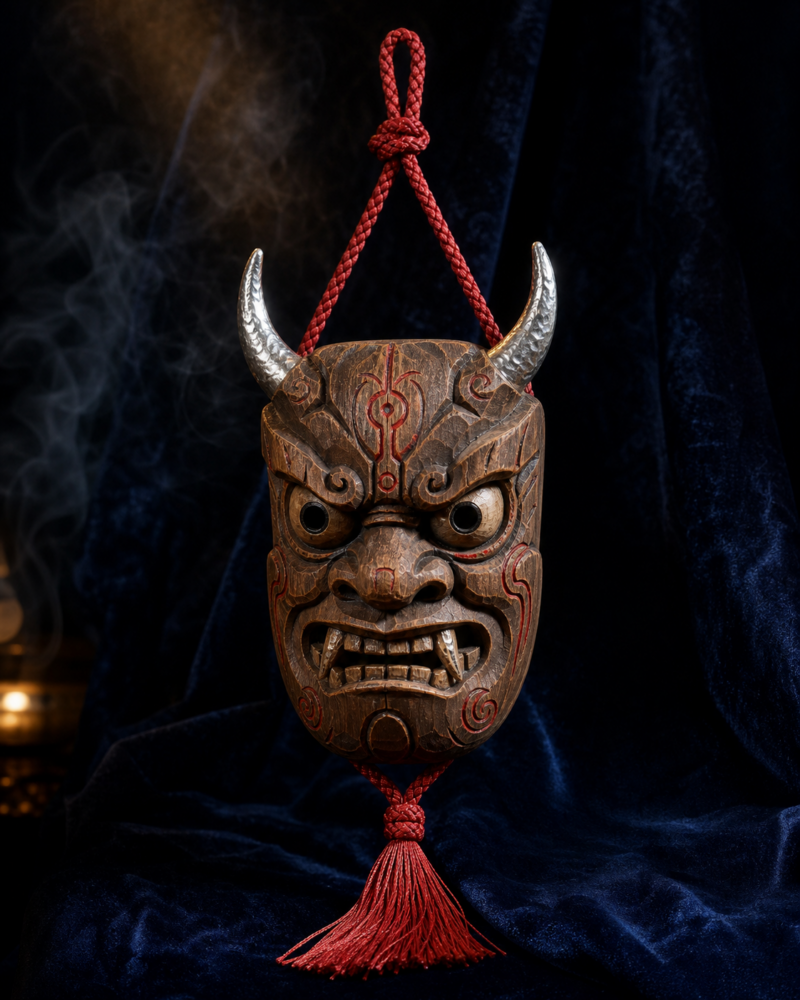
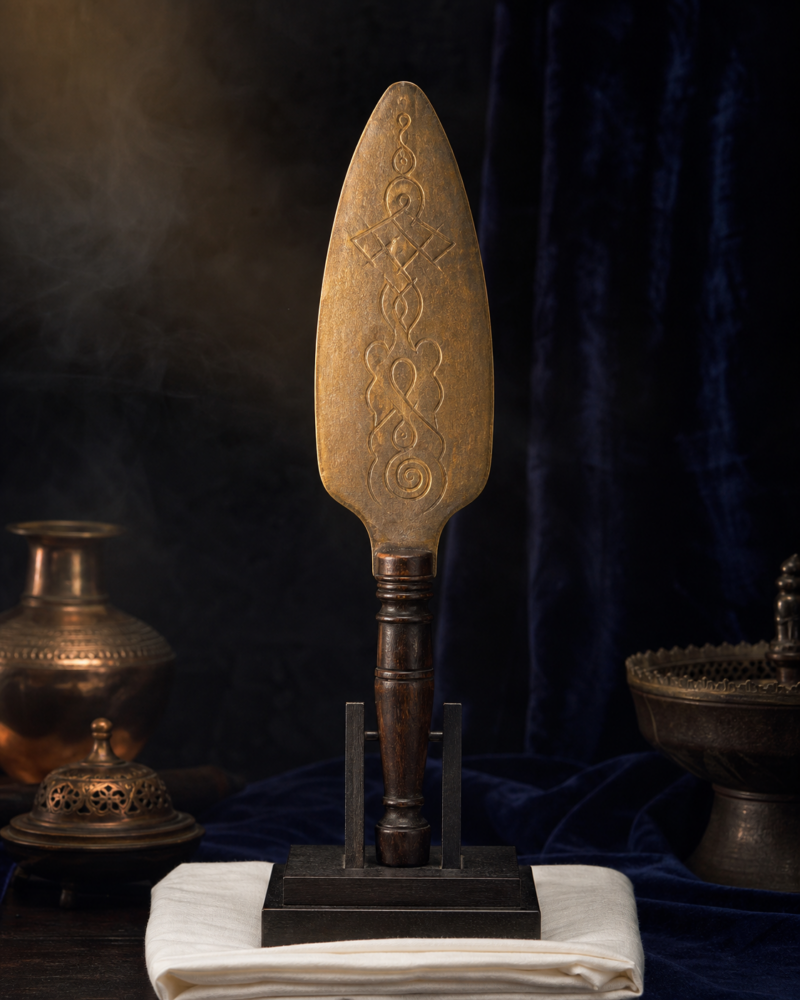
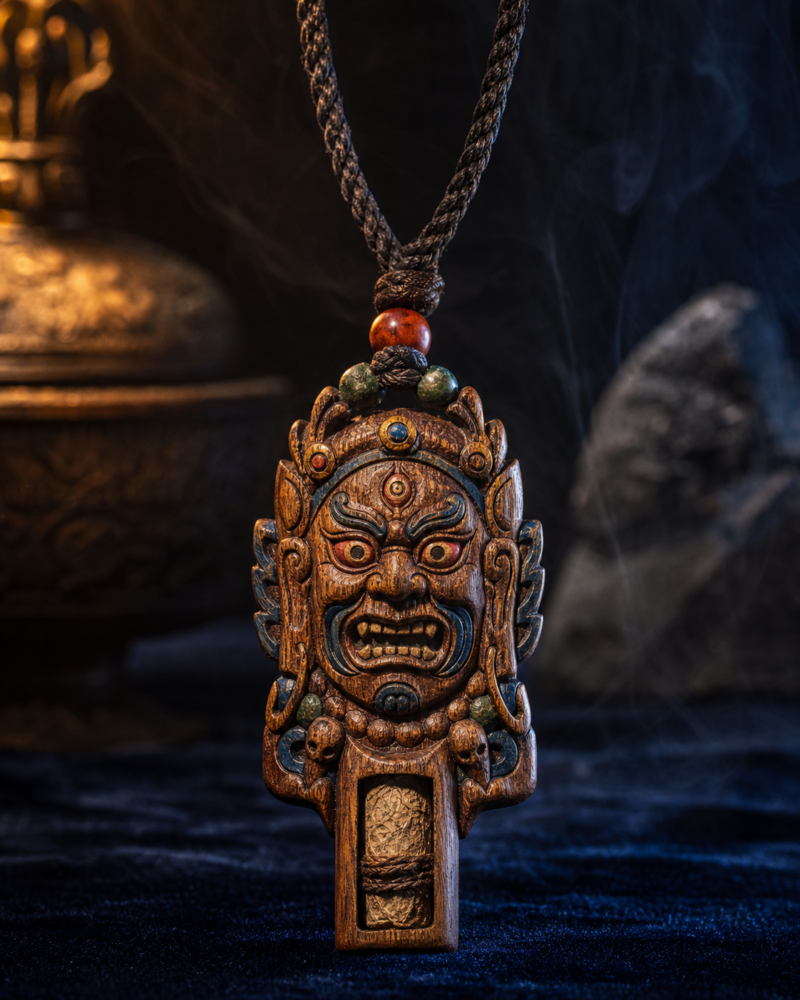
Cross-Cultural Fusion — Miao × Naxi
“Two Shamans” Union Piece — Miao Silver & Dongba Script
A single object joining the world's two last living shamanic scripts of protection — hammered Miao silver around a hand-painted Dongba scroll.
Cultural Lineage
There are perhaps two places left on Earth where a shamanic tradition still writes. In the high villages of Guizhou, the Miao work silver as a second language — horns, locks and pendants hammered thin as leaf, worn in the great festival crowns and, more quietly, at the throat of every child whose grandmother fears the dark roads. Miao cosmology is explicit about the metal: silver is the substance malice cannot cross in silence. It rings, it brightens, it takes the blow first. A Miao silver lock is not jewelry; it is a door bolted on a small life.
Eight hundred kilometers east and a world apart, in the Naxi country below the Jade Dragon mountains of Yunnan, the last Dongba priests keep the only pictographic script still in living ritual use — a writing of small suns, mountains, figures and gates, named a world treasure by the archivists who race to record it. A Dongba blessing scroll is not decoration either. It is a spoken rite fixed to paper: the priest paints what he chants, and the paper keeps chanting when he has gone home.
These two lineages never met in history. They guarded different mountains, different dead, different dark. The union piece is this atelier's deliberate act of introduction: a blessing scroll painted in the Dongba tradition of Yunnan, rolled, bound in cinnabar-red thread, and sealed inside a case of hammered Miao silver worked in Guizhou in the form of the double horn. The silver stands watch outside; the script stands watch within. In the language of both traditions, the piece holds two vigils at once — the metal that turns malice, the writing that names and unmakes the night's fears.
Because each element is the work of a named living workshop and the pairing was made once, this is a singular object. One exists. The atelier will commission no second this year, and possibly none after: the point of a meeting like this is that it is rare.
What Sha It Addresses
The union piece is composed for the bearer under converging weather: the certainty that someone wishes you ill — the held smile, the followed feeling, the cold at the neck when a certain name is said — and the nights that have become occupied territory. In Miao belief the hammered silver takes the projectile of envy first, ringing where flesh would bruise; in Dongba understanding the painted script keeps naming the night's intruders until they are named out of the room. Together they form the strongest paired ward this house has assembled: for the person who is being worn down on both fronts, waking and sleeping.
Detailed Usage Method
Two lineages share this object, and the rite of taking it up honors both in sequence — silver by day, script by night.
-
Timing — A Bright Morning, a Quiet Night
Begin on a morning of clear sun. Hold the sealed piece in direct daylight for the space of a hundred heartbeats — Miao practice wakes silver in the sun, whose metal it is held to be.
-
Placement — The Bearer, Then the Bedhead
For the first seven days wear or carry the piece on your person through the waking hours. Each night of that week, hang it at the head of the bed before sleep. Day belongs to the silver, night to the script; the week teaches the piece both of its watches.
-
Binding — The Unbroken Seal
The silver case opens, but the scroll's cinnabar thread must never be untied. You may open the case once, at the end of the first week, to see the rolled script and know it is real — then close it and let the seal stand. A read blessing, the Dongba say, is a spent one.
-
Purification — The Two Cloths
Monthly, at the new moon, polish the silver with the white cloth provided, and pass the closed case once through juniper smoke for the scroll within. Two traditions, two cleansings, one evening.
Warnings, Taboos & Prohibitions
- Never separate the scroll from its silver case. The piece is a union; divided, in the reading of both lineages, it is two orphans rather than two guards.
- Do not untie the cinnabar thread or unroll the scroll to display the script. The blessing serves sealed; opened to spectators it is considered read out, and no second painting will restore this pairing.
- Do not let the silver be polished with chemical dips or machine cloths. Miao silver is fed by hand and breath; the tradition holds that harsh baths strip more than tarnish.
- The piece must not be stored in a bank vault or other borrowed strong-room for long periods. A ward locked away from its bearer guards the lock, not the life.
- If the silver blackens suddenly and deeply within days, both traditions read it as the metal having eaten a directed blow. Do not scrub it that same day. Let it stand one night at the bedhead, then cleanse by both cloths and watch what the following week brings.
Materials & Craftsmanship
Packaging & Unboxing
The union piece arrives in a black lacquered presentation chest with two chambers — one holding the sealed piece on a silk bed, the other holding its instruments: the white silver-cloth, a bundle of dried juniper for the monthly smoke, and a letterpressed folio telling the story of both workshops, the seven-day rite of taking up, and the law of the unbroken seal. A numbered certificate of the pairing, stamped in cinnabar, lies beneath the silk. The unboxing is built as a formal introduction: you are not opening a purchase, you are receiving two guests who have agreed, once, to stand the same watch.