Cross-Cultural Fusion — Chinese Folk Occult
“Double Thunder” — Thunder-Struck Jujube Wood & Black Donkey Hoof
The two heaviest instruments of Chinese folk apotropaics, bound into a single ward for the worst weather a life can enter.
Cultural Lineage
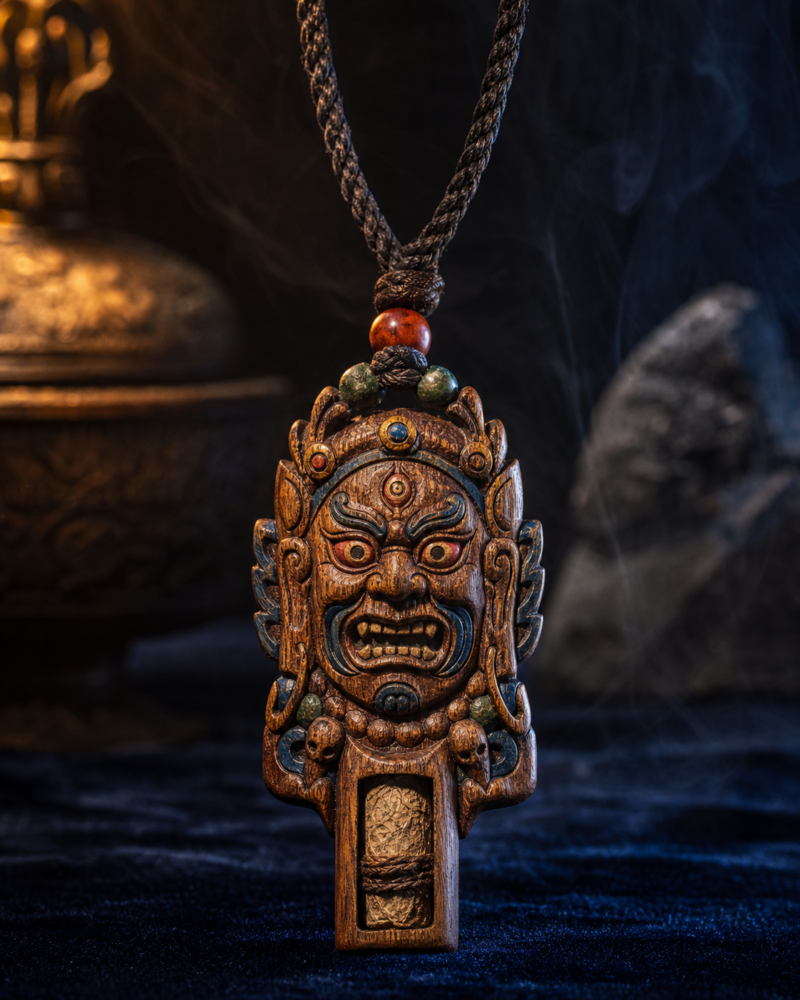
Every tradition keeps a shelf of last resorts — the instruments not for ordinary weather but for the storm. In the folk occult lineages of northern China, two materials own that shelf outright. The first is thunder-struck jujube wood, lei ji zao mu: timber from a jujube tree that has taken a lightning strike and survived it. The old reasoning is exact — the jujube is already a yang tree, dense, red-hearted, planted at doors for luck; a bolt of heaven's own fire passing through it leaves, in the tradition's words, the signature of thunder in the grain. Seals, beads and pendants cut from such wood have been prized for centuries as the strongest portable yang known to the canon.
The second material walks out of darker stories: the black donkey's hoof, hei lu ti zi, famous wherever the grave-lore traditions were told and retold — most recently in the novels and films of the tomb-adventure canon that carried the phrase to a hundred million readers. In the old accounts it is the specific instrument against the restless dead, the thing pressed forward when what stands in the doorway should not be standing at all. Folk practice kept it as the hard counter to corpse-yin: absolute, unarguing, final.
Binding the two together is the fusion gesture of this atelier: thunder above, the black hoof below, joined with red cord in the double knot the northern practitioners used for objects that must not come apart. The pairing is not decorative. In the canon's arithmetic, the wood answers the weather of misfortune — the long runs of ruin that feel aimed — while the hoof answers the colder matter: proximity to death, houses that never warmed after a passing, the fear that something followed you home.
Each piece is cut from storm-felled jujube sourced in the northern provinces, paired with a hoof of black horn from fallen working animals, cleaned and stabilized by the traditional dry methods. Two exist in this consecration batch. The atelier does not hurry the sourcing of a third.
What Sha It Addresses
Double Thunder is composed for the two sufferings the folk canon treats as one weather system. The first is the curse-run of misfortune at its heaviest grade — not a bad week but a marked season, loss following loss with the rhythm of intent. The second is the primal fear of death and the dead: the funeral that never quite ended, the room that stays cold, the certainty at three in the morning that the dark is occupied. Tradition holds the thunder-wood to be pure ascending yang, the hoof to be the specific answer to corpse-yin; bound together they are the canon's maximum ward, kept for the years that earn it.
Detailed Usage Method
An instrument of this weight is not hung casually; the northern practice seats it once, correctly, and thereafter leaves it to its work.
-
Timing — Noon, the Hour of Pure Yang
Seat the piece at solar noon, when yang stands at its height — never at dusk, never in rain. If thunder can be heard on the chosen day, the old texts consider the timing not ruined but blessed.
-
Placement — The Spine of the House
Hang it on the central interior wall of the dwelling — the load-bearing spine, not the front door. Double Thunder is not a gate-guard but a keep: it holds the innermost room where you actually sleep and breathe.
-
Binding — The Double Knot Renewed
The red cord arrives tied in the northern double knot. Without untying it, add one further knot of your own at the cord's tail while stating plainly, aloud, what season of your life this instrument is being asked to end.
-
Purification — After the Storm
The piece is not smoked with incense like lesser wards. Instead, after each true thunderstorm that passes over your dwelling, wipe the wood once with a dry red cloth. In the tradition, the thunder itself is the purification; the cloth merely acknowledges receipt.
Warnings, Taboos & Prohibitions
- Do not hang Double Thunder in a bedroom shared with an infant. The canon holds its yang too loud for a newly arrived soul; seat it one room away.
- Never let the hoof touch soil again once it has been raised into the ward. Grounding it is held to return it to the graveyard's jurisdiction.
- Do not display the piece to visitors as a curiosity or recount its purpose to casual guests. An instrument made into an anecdote is, in the practitioners' words, a drawn bow slowly unstrung.
- The red cord must never be replaced with cord of another color. If it frays, replace with red silk only, retying your personal knot last of all.
- Do not acquire this piece merely to complete a collection while another household in genuine need waits. The tradition is blunt: the instrument serves the storm-struck first, and resentment of misuse is written into its lore.
- If both wood and hoof are ever found fallen together, the tradition reads a major strike absorbed. Do not rehang them. Wrap them in black cloth, thank them plainly, and bury them at a crossroads before the next nightfall.
Materials & Craftsmanship
Packaging & Unboxing
Double Thunder arrives in a full-depth black lacquered chest lined in red silk — the only object in the atelier's line packed in red, because the northern canon wraps its heaviest instruments in the color of the ward itself. Within: the bound piece seated in a carved recess, the forged iron hook, a spare length of red silk, and a letterpressed folio setting out the noon rite, the knot of intention, the storm-purification, and the burial protocol that ends the instrument's service. The chest is built to be kept; when the ward has done its work, the chest becomes its reliquary.