Ancient Egypt — The Wedjat
Eye of Horus “Wedjat” Protection Plaque
The restored eye of the falcon god, carved in lapis-dark stone — four thousand years of standing between its bearer and the hostile gaze.
Cultural Lineage
The story is one of the oldest complete myths on Earth. Horus, the falcon lord of the sky, met his uncle Set — murderer of his father Osiris — in a war for the throne of the world, and in that war Set tore out Horus's left eye and shattered it. The eye was gathered piece by piece and made whole again — by Thoth, the ibis god of wisdom, in the account most often carved — and this restored eye, the Wedjat, "the one made sound," became something greater than an organ of sight. It became the proof that what malice destroys can be reassembled, and the emblem under which Egypt placed itself for protection.
The archaeology is unambiguous about how seriously this was meant. Wedjat amulets survive in the tens of thousands — in faience, carnelian, lapis lazuli, gold — worn at the throat by the living, folded into the linen bandages of the dead at prescribed stations of the body. Sailors painted the eye on the bows of Nile boats to see danger before it arrived. The medical papyri measured prescriptions in fractions of the Wedjat, as if healing itself were portions of the restored eye. For three thousand years of pharaonic history, no protective sign was more worn, more carved, or more trusted.
What was it against? The texts are specific: the hostile gaze and the hostile word — envy that travels through the eye, slander that travels through the mouth, the ill-wish the Egyptians treated as a real projectile crossing real distance. The Wedjat meets the gaze with a gaze. Its logic is not concealment but confrontation: an eye that has already survived the worst that can be done to an eye, held up steadily toward whatever is looking.
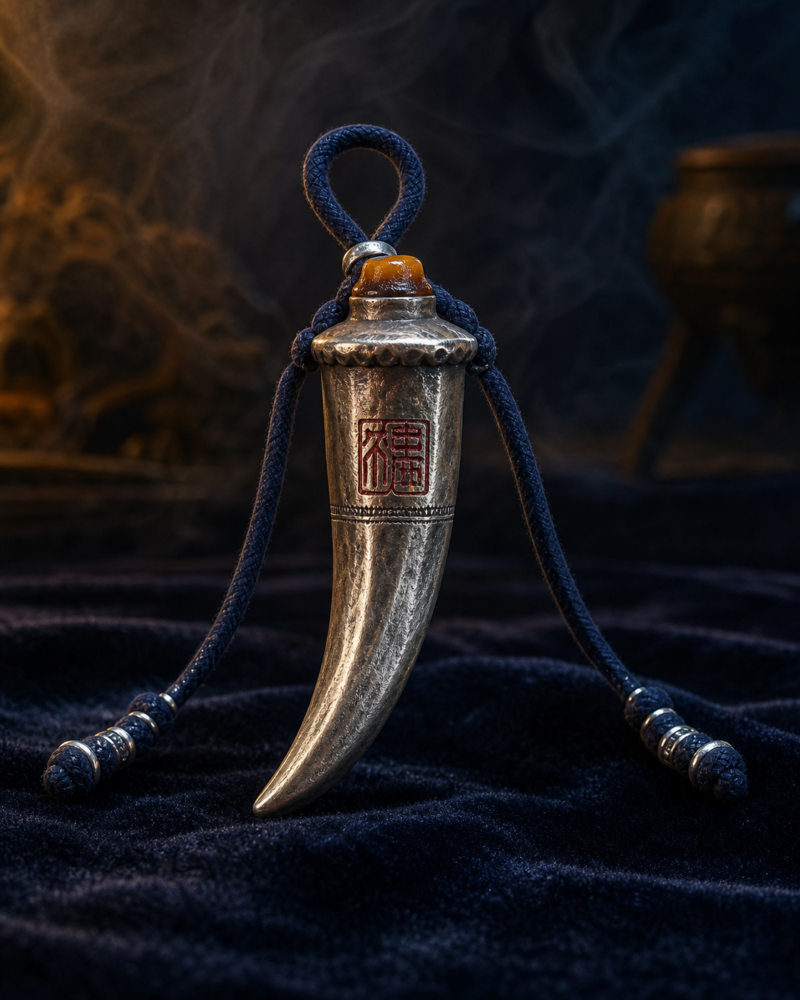
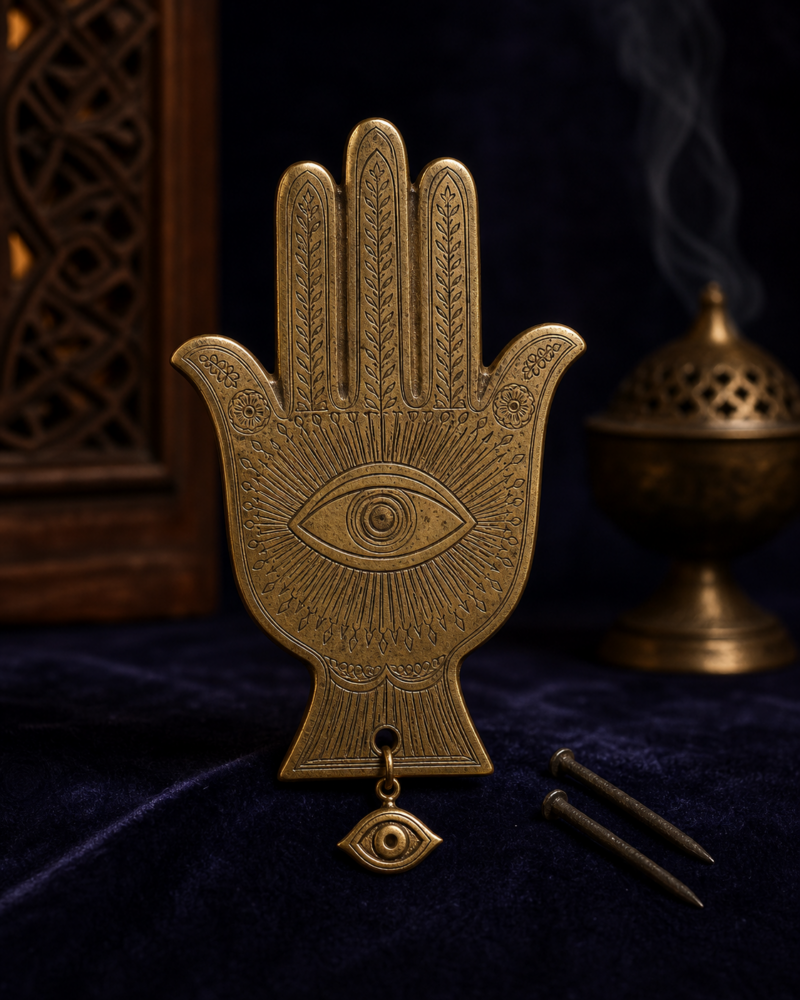
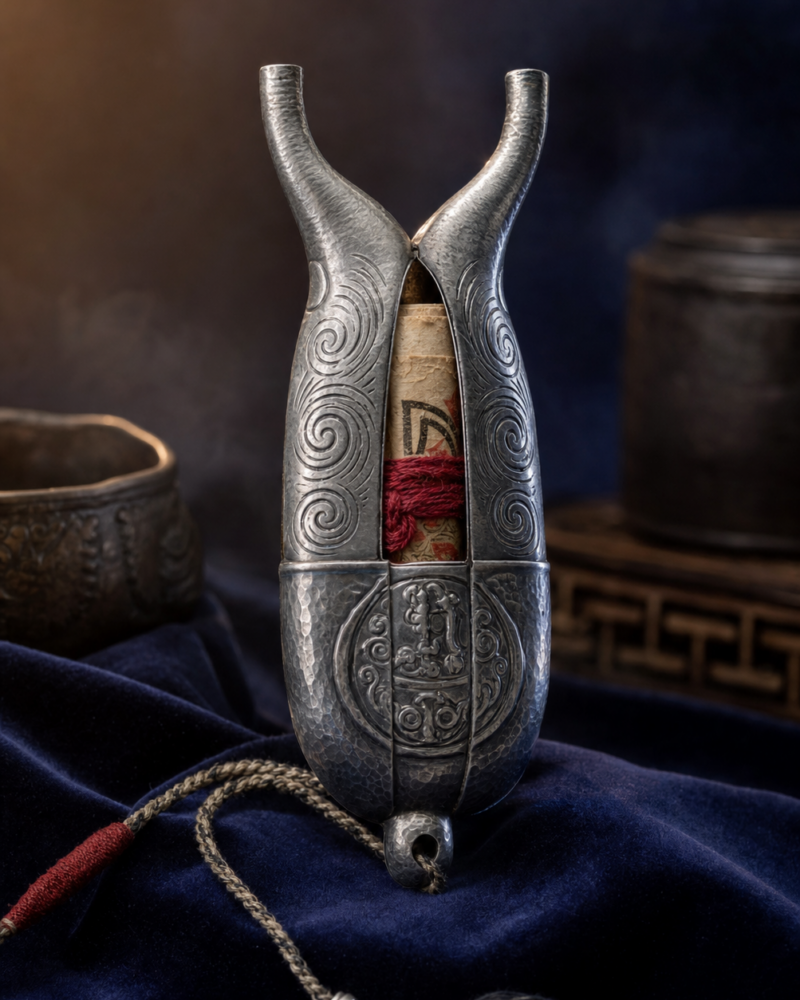
This plaque is carved in that tradition and says so plainly: made in the tradition of, not excavated from — the atelier deals in continuations, never in fake antiquities. Stone in the deep lapis-and-obsidian palette the funerary workshops prized, the eye and its falcon markings cut in the canonical proportions, the reverse carrying the hieroglyphic protection formula. Egypt's most copied symbol, restored to its original seriousness.
What Sha It Addresses
The Wedjat is composed for one suffering, anciently and exactly: the certainty that someone wishes you ill. The envy you can feel on your skin at the meeting table; the friendship that curdled and now watches; the success that drew eyes you did not want; the words being said about you in rooms you are not in. Egyptian practice treated this as a physics — the ill-wish crossing space through gaze and word — and posted against it the one eye that cannot be wounded again. The plaque does not strike back; nothing in this house does. Tradition simply holds that the malicious gaze, meeting the restored eye, finds its mark already occupied by something older, calmer, and impossible to stare down.
Detailed Usage Method
The Wedjat's rite is a posting of watch: the eye is seated where it can meet what arrives, and relieved at the proper interval.
-
Timing — Sunrise, the Eye's Hour
Seat the plaque at sunrise, the hour Egypt gave to the restored eye. The morning light should reach it on its first day; the tradition considers the eye to open then.
-
Placement — Facing the Room's Entrance
Stand or hang it in the room where you feel most watched — office or living room — with the eye facing the entrance, at or above eye level. What comes in through gaze and word comes in by the door.
-
Alignment — The Left-Eye Rule
The Wedjat is the left eye, the moon's eye, and is seated to the left of the doorway as you face it wherever the wall allows. The old workshops held that the eye keeps its own side, as it does on the sarcophagi.
-
Renewal — The Dark of the Moon
On each moonless night, wipe the stone with a dry linen cloth and turn the plaque face-down until morning. The moon's eye rests when the moon does; at sunrise, set it upright again, watch resumed.
Warnings, Taboos & Prohibitions
- Never seat the Wedjat facing a mirror. An eye posted against a mirror stands watch over its own reflection, and the door goes unkept.
- Do not hang it above a bed's headboard. The Wedjat's office is the meeting of gazes, and the sleeper should not lie in the line of that meeting.
- Do not seat two Wedjat plaques facing each other in one dwelling. Two restored eyes locked on one another, the workshop tradition warns, keep watch on nothing else.
- Never gift your own seated Wedjat onward after it has kept watch for you. What it has met and turned stays in its account; a new bearer deserves an unburdened eye.
- If the plaque cracks across the eye itself, the tradition reads a direct strike absorbed — the exact wound of the myth, taken again on your behalf. Wrap it in linen, thank it, and bury it facing east; then, if you choose, seat a successor.
Materials & Craftsmanship
Packaging & Unboxing
The plaque arrives bedded in unbleached linen inside a black lacquered case with a lapis-blue interior — the one departure from the house's black-on-black, in honor of the line's palette. Beneath it: the folded rest-cloth, a small brass easel for tabletop seating, and a letterpressed folio recounting the myth of the shattering and restoration, the sunrise seating, and the left-eye rule. The makers suggest the case be opened in morning light, so that the first thing the eye meets in your keeping is the sun — which is, in the oldest understanding, its brother.